
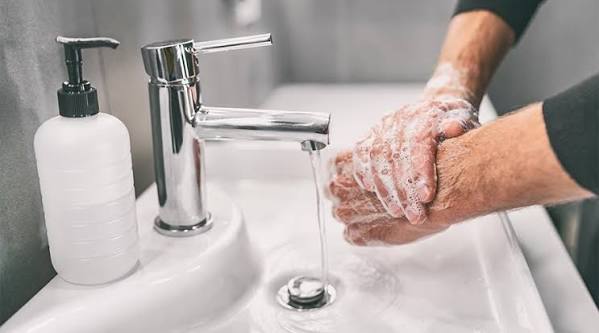
Handwashing with soap remains one of the most effective infection control measures available to any building. Community handwashing programs reduce diarrheal illness by 23 to 40 percent and respiratory illness in the general population by 16 to 21 percent (Centers for Disease Control and Prevention). Those results depend on people completing the full handwashing sequence, and the fixtures in a public restroom influence that behavior more than most facility plans account for.
How often do restroom users skip soap?
Restroom users skip soap far more often than they report. In an observational study of more than 3,700 people in public restrooms, roughly one in three did not use soap and about one in 10 did not wash their hands at all (Journal of Environmental Health). Self-reported surveys consistently overstate compliance, which makes direct observation the more useful planning benchmark.
Which friction points interrupt the sequence?
Four friction points appear repeatedly in restroom observations and maintenance logs:
- Empty dispensers that stop the sequence before lathering begins
- Dispensers placed where users must reach across a wet counter
- Slow or inconsistent output that encourages users to give up on soap
- Drying stations located far from the lavatory, creating drips and congestion
How does dispenser format affect refill reliability?
Refill reliability improves when a dispenser holds more product or draws from a shared supply. Commercial soap systems now range from single-station dispensers to multi-feed systems, giving designers a choice between individual units at each lavatory and centralized supply for high-volume restrooms (American Specialties).
Where does centralized supply fit best?
Centralized supply fits restrooms where traffic arrives in surges, such as airports, stadiums, and schools between class periods. Fewer refill points mean fewer service interruptions during peak demand. Individual dispensers remain practical for smaller restrooms with steady, lighter use, where a single empty unit affects only one station and is easy to spot during routine rounds.
How do refill intervals affect staffing?
Refill intervals determine how often custodial staff must enter a restroom during business hours. Longer intervals free staff for deeper cleaning tasks and reduce the number of times a busy restroom must be partially closed for service, which keeps traffic moving during the hours when users need the space most.
Does handwashing duration matter as much as soap use?
Duration matters because lathering time determines how much contamination soap can lift from the skin. Global guidance recommends that a complete handwash, including drying, last 40 to 60 seconds (World Health Organization). Users rarely reach that window when the sequence feels slow or awkward, so every delay built into the fixture layout shortens the time spent actually washing.
How does layout support a complete wash?
Layout supports a complete wash when soap, water, and drying sit in a logical, uninterrupted line. Users who can lather, rinse, and dry without stepping sideways or waiting behind another person are more likely to finish each step instead of cutting the process short.
What role does touch-free activation play?
Touch-free activation removes shared contact points from the sequence. Germs move easily between hands and frequently touched surfaces, and wet hands transfer microbes more readily than dry hands (Centers for Disease Control and Prevention). Reducing the number of surfaces a clean hand must touch after washing protects the value of the wash itself.
What should facility teams evaluate before specifying?
Facility teams should evaluate four practical factors before finalizing a dispenser schedule:
- Sensor response time and activation range at each lavatory
- Power or battery access for routine maintenance
- Compatibility between soap formulation and dispenser mechanism
- Visual cues that show users where to place their hands
What does this mean for restroom planning?
Handwashing outcomes are a design result as much as a behavioral one. Facilities that treat dispenser capacity, format, and activation as part of hygiene planning give users fewer reasons to skip steps and give maintenance teams fewer urgent refills to chase during peak hours. The payoff shows up in cleaner hands, steadier operations, and restrooms that support public health goals by design.